Fault Lines in the Black Box: Using Signal Interference Theory to Expose AI Vulnerabilities
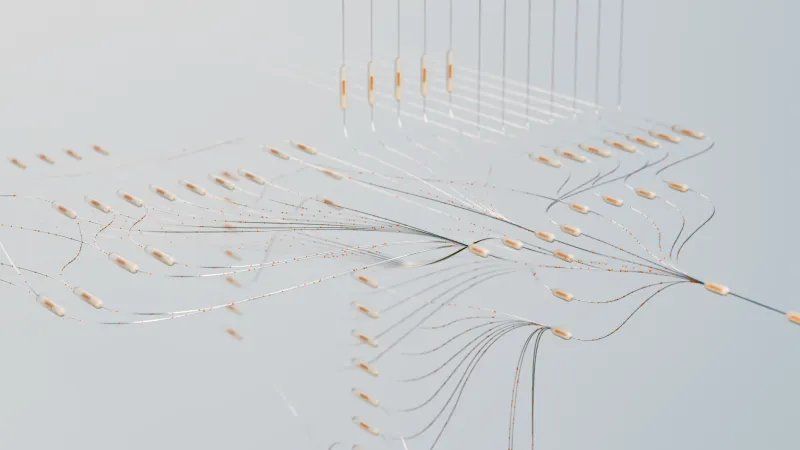
For decades, engineers have exploited interference — the superposition of waves that either amplify or annihilate one another — to filter noise, sharpen signals, and diagnose structural faults in physical systems. Now a growing cohort of researchers is asking a provocative question: what if the same mathematical framework that governs acoustic cancellation and radio frequency analysis can be turned inward, applied not to electromagnetic or mechanical waves, but to the activation patterns flowing through a neural network?
The answer, emerging from laboratories at institutions including MIT, Stanford, and Carnegie Mellon, suggests that interference theory is not merely a metaphor for machine learning pathology — it is a genuine diagnostic instrument, one capable of revealing adversarial vulnerabilities that conventional testing methods routinely miss.
Activations as Wave Phenomena
To understand the approach, it helps to revisit what happens inside a deep neural network during inference. As an input propagates forward through successive layers, each neuron computes a weighted sum of its predecessors' outputs and passes the result through a nonlinear activation function. The cumulative effect across thousands or millions of such units produces high-dimensional activation vectors — mathematical objects that, when analyzed across a population of inputs, exhibit structured oscillatory behavior analogous to waveforms.
Researchers in the interference-auditing field treat these activation trajectories as signals. When a network processes a benign input — a correctly labeled photograph of a stop sign, for instance — the activation pattern across a given layer settles into a characteristic "signature." Introduce a carefully crafted adversarial perturbation, one imperceptible to the human eye but devastating to the model's confidence, and the activation signature shifts. Critically, when both the clean and adversarial representations are superimposed mathematically, the resulting interference pattern exhibits measurable phase discordance — a signature of destructive interference that betrays the manipulation.
Phase Cancellation as a Detection Mechanism
The diagnostic power of this approach lies in its sensitivity. Traditional adversarial detection methods often rely on statistical outlier analysis or auxiliary classifier networks, both of which can themselves be fooled by sufficiently sophisticated attacks. Phase-based interference analysis, by contrast, is grounded in the geometry of the activation space rather than any learned decision boundary.
In practice, the technique involves computing the Fourier decomposition of activation trajectories across a reference set of verified clean inputs, establishing a baseline spectral profile for each network layer. When a candidate input is evaluated, its activation trajectory is transformed into the frequency domain and compared against this baseline. Regions of constructive interference — where the candidate signal reinforces the baseline — indicate consistency with known-good behavior. Regions of destructive interference flag anomalies.
Early implementations of this methodology, published in conference proceedings at NeurIPS and ICLR, have demonstrated detection rates exceeding 90 percent against several canonical adversarial attack families, including the Fast Gradient Sign Method and Carlini–Wagner perturbations, while maintaining false-positive rates below five percent on clean validation sets. Those figures compare favorably with leading conventional detectors and, importantly, degrade more gracefully when attackers attempt to adapt.
Autonomous Vehicles: A High-Stakes Test Bed
Few domains illustrate the urgency of robust adversarial detection more sharply than autonomous driving. Perception systems in self-driving platforms must classify objects — pedestrians, cyclists, traffic signals — in real time, under variable lighting, and against an adversarial landscape that includes both accidental confounders and deliberate tampering. A sticker applied to a stop sign with specific spectral properties can, under certain attack regimes, cause a state-of-the-art object detector to classify the sign as a speed limit placard.
Several automotive technology groups are now integrating interference-based auditing modules directly into the inference pipeline. Rather than running as a post-hoc batch process, these modules compute layer-wise interference metrics on a rolling basis, flagging inputs whose activation spectra deviate from the established baseline by more than a calibrated threshold. When a flag is raised, the vehicle's decision-making layer can invoke a conservative fallback policy — slowing, requesting driver confirmation, or deferring to redundant sensor modalities — before committing to a potentially erroneous classification.
The computational overhead of real-time spectral analysis has historically been a barrier to deployment. Recent hardware-aware implementations, leveraging the fast Fourier transform optimizations available on modern automotive-grade system-on-chip platforms, have reduced per-inference latency penalties to under three milliseconds, a figure compatible with the 100-millisecond decision cycles typical in highway driving scenarios.
Medical Imaging and the Cost of a False Negative
The stakes in clinical AI are different from those in automotive perception, but no less serious. Radiological models trained to detect malignancies in chest CT scans or mammograms can exhibit blind spots that, while rare in aggregate, cluster dangerously around specific patient subpopulations or imaging equipment configurations. An adversarial perturbation in the medical context need not be deliberately malicious — systematic artifacts introduced by scanner calibration drift or compression algorithms can produce inputs that confound a model in ways statistically indistinguishable from an intentional attack.
Interference-based auditing offers a path toward continuous model monitoring in deployed clinical settings. By maintaining a running spectral baseline derived from the institution's own patient population and imaging hardware, a diagnostic system can identify when incoming scans are activating the model in anomalous interference patterns — a signal that the input may lie outside the effective distribution on which the model was validated. Clinicians can then be alerted to apply heightened scrutiny or request a secondary read before a report is issued.
The Road Ahead
Interference-based model auditing is not a complete solution to the adversarial robustness problem. It is a diagnostic layer, one that complements rather than replaces adversarial training, certified defenses, and rigorous pre-deployment testing. Critics note that sufficiently adaptive attackers, aware of the spectral monitoring mechanism, may eventually learn to craft perturbations that preserve the activation spectrum while still degrading model performance — a challenge analogous to the arms race between radar and stealth technology.
That parallel is instructive. In the physical world, engineers did not abandon radar when stealth aircraft emerged; they refined their sensing modalities, diversified their detection frequencies, and built layered defense architectures. The same discipline is warranted here. As neural networks assume greater authority over safety-critical decisions — on American highways, in hospital imaging suites, and beyond — the tools used to audit their integrity must be as rigorous and as principled as the physics from which they are drawn.
Where waves collide, knowledge emerges. In the activation spaces of modern AI, that collision is just beginning to yield its secrets.