The Physics of Silence: How Anti-Phase Engineering Turns Unwanted Sound Into Nothing
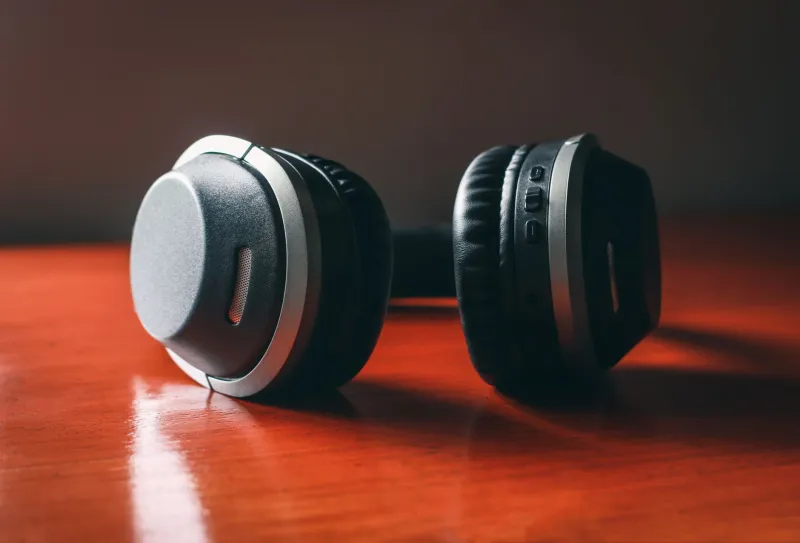
There is something almost paradoxical about the idea of fighting sound with more sound. Yet this is precisely the principle that underlies active noise-cancellation (ANC) technology — a field that has matured from a niche aviation tool into a ubiquitous feature of consumer electronics. At its core, ANC is a practical application of destructive interference: the phenomenon that occurs when two waves of equal amplitude and opposite phase occupy the same space, canceling each other's pressure variations and producing silence.
For readers familiar with wave mechanics, the elegance of this approach is immediately apparent. For those newer to the concept, it is worth grounding the discussion in first principles before examining how engineers have translated a physics abstraction into hardware that millions of Americans use on their daily commutes.
Waves in Opposition: The Interference Mechanism
Sound propagates as a longitudinal pressure wave — alternating compressions and rarefactions moving through a medium. When two coherent sound waves meet, their amplitudes combine according to the superposition principle. If the waves are in phase, their pressure peaks align and the result is constructive interference: a louder sound. If they are precisely out of phase — offset by half a wavelength, or 180 degrees — their peaks align with the other's troughs, and the pressure variations cancel.
In an idealized scenario, two identical but inverted waveforms sum to zero. Real-world ANC systems cannot achieve perfect cancellation, but they can reduce ambient noise by 20 to 40 decibels across a useful frequency range — a reduction that corresponds to perceiving a sound as roughly one-quarter to one-sixteenth of its original loudness.
The challenge is not conceptual. It is computational and mechanical: generating the anti-phase signal fast enough, with sufficient accuracy, across a continuously changing acoustic environment.
The Signal Chain: Microphones, Processors, and Drivers
A modern ANC headphone integrates at least two microphones per ear cup — one facing outward toward the environment (feedforward) and one facing inward toward the ear canal (feedback). The feedforward microphone samples incoming ambient sound before it reaches the listener. This signal is fed into a digital signal processor (DSP), which applies an inversion algorithm and introduces a precisely calculated delay to account for the physical distance the sound must travel to reach the ear.
The DSP then sends the anti-phase signal to the speaker driver, which reproduces it in real time. The feedback microphone monitors residual noise inside the ear cup and provides a correction loop, allowing the system to compensate for modeling errors and acoustic leakage. Together, feedforward and feedback configurations form a hybrid ANC architecture — the current industry standard in premium devices from manufacturers such as Sony, Bose, and Apple.
The processing latency must remain below approximately one millisecond to maintain phase accuracy at frequencies above 1,000 Hz. This requirement has driven significant investment in low-latency DSP chips, and it also explains why ANC systems are most effective at low frequencies — the long wavelengths of bass and engine rumble are easier to track and invert than the rapidly oscillating waves of higher-pitched sounds.
Where ANC Performs — and Where It Struggles
The environments in which ANC excels are those dominated by steady-state, low-frequency noise. Aircraft cabins are the canonical example: the broadband roar of jet engines and fuselage vibration sits largely below 1,000 Hz, a range well within the cancellation bandwidth of current hardware. Pilots have used ANC headsets since the 1980s, and the technology has since spread to commercial passengers seeking relief on transcontinental flights.
Urban commuters represent another major use case. Subway cars, bus engines, and highway traffic all generate the kind of low-frequency, relatively predictable noise that ANC handles effectively. Open-plan offices, increasingly common in American workplaces, present a more complex acoustic environment — one in which HVAC systems and distant machinery yield to ANC while nearby conversation does not.
This is the central limitation of current destructive interference techniques: speech occupies a frequency range — roughly 300 Hz to 3,400 Hz — that partially overlaps with ANC's effective window but extends well into territory where cancellation degrades. Attempting to cancel speech too aggressively risks distorting the very sounds a user wants to hear, and the chaotic, non-stationary nature of conversational noise makes accurate inversion far more difficult than suppressing a jet engine's predictable drone.
Emerging Challenges: Adaptive Algorithms and Spatial Complexity
Researchers are addressing speech clarity through machine-learning-based approaches that classify incoming audio in real time, selectively applying cancellation only to non-speech frequency bands. Qualcomm, among others, has integrated such adaptive noise-management algorithms into its audio chipsets, allowing the system to distinguish between a colleague's voice and an HVAC unit operating in the same room.
A second frontier involves spatial selectivity. Conventional ANC treats the acoustic environment as a single point — the ear canal — and optimizes cancellation at that location. Emerging beamforming techniques, borrowed from array signal processing, attempt to suppress noise arriving from specific directions while preserving sounds from others. This approach is computationally intensive and remains largely in the research phase for consumer applications, though it has seen deployment in conference room microphone arrays.
Physical constraints also impose boundaries that no algorithm can fully overcome. At frequencies above approximately 2,000 Hz, the half-wavelength of sound becomes shorter than the distance between the sampling microphone and the ear, introducing phase errors that undermine cancellation. Passive attenuation — the physical isolation provided by ear cup materials — compensates for this gap at high frequencies, which is why hybrid ANC headphones combine electronic cancellation with acoustic sealing rather than relying on electronics alone.
Interference as Infrastructure
It is worth stepping back to appreciate what ANC represents as an engineering achievement: a system that continuously measures a physical phenomenon, computes its mathematical inverse, and injects that inverse into the same physical medium — all within a fraction of a millisecond, in a device small enough to fold into a carry-on bag. The underlying principle, destructive interference, is among the most fundamental behaviors of wave physics. The execution is a testament to how far signal processing, materials science, and miniaturized computing have advanced.
For researchers and students working in acoustics, communications, or embedded systems, ANC headphones offer a compact case study in the practical tension between theoretical elegance and engineering constraint. The wave equation is clean. The real world — with its irregular geometries, transient noise sources, and the biological complexity of the human ear — is not. Navigating that gap is where the most interesting work in interference engineering continues to happen.
As adaptive algorithms grow more sophisticated and low-power DSP capabilities expand, the ceiling on ANC performance will rise. The silence that destructive interference promises may never be absolute, but it is getting closer.