Molecular Harmony and Cancellation: How Quantum Interference Is Reshaping the Search for New Medicines
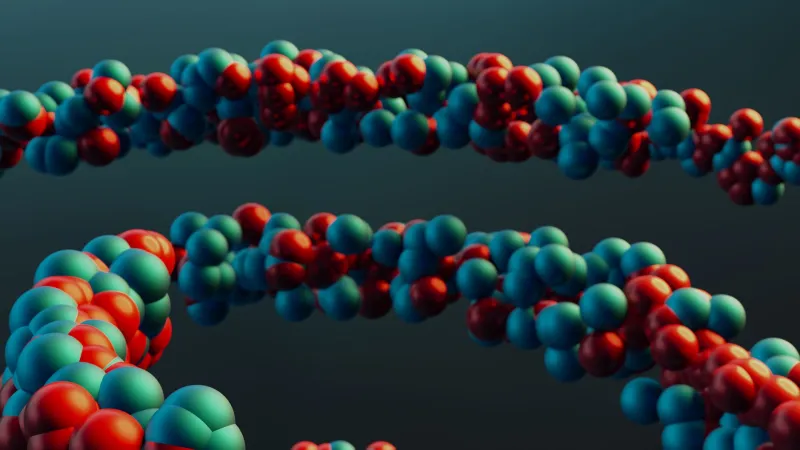
In classical physics, two objects occupying the same space at the same time is an impossibility. In quantum mechanics, it is not only possible but essential. Electrons, photons, and other quantum entities exist as probability distributions — wavefunctions — that can overlap, reinforce, and cancel in ways that determine the physical and chemical properties of matter. This behavior, quantum interference, governs everything from the conductivity of a molecular wire to the binding affinity of a drug candidate for its target protein.
For most of the twentieth century, pharmaceutical researchers worked around quantum effects rather than with them, relying on classical approximations to model molecular interactions. That approach is changing. Advances in quantum computing, machine learning-enhanced quantum chemistry, and structural biology are enabling scientists to treat interference phenomena not as computational inconveniences but as design parameters — variables to be tuned in the pursuit of more effective, more selective medicines.
Wavefunctions as Design Space
To understand why quantum interference matters in drug discovery, it helps to recall what a wavefunction represents. In quantum mechanics, the state of a particle is described by a complex-valued mathematical function whose squared magnitude gives the probability of finding the particle at a given location. When two wavefunctions overlap, their amplitudes — not their probabilities — add together. Regions where the amplitudes reinforce produce constructive interference; regions where they cancel produce destructive interference.
At the molecular scale, this has direct chemical consequences. The electronic structure of a molecule — the distribution of its electrons — determines how it interacts with other molecules, including the proteins that serve as drug targets. Constructive interference between molecular orbitals can enhance electron density in a region that promotes binding. Destructive interference can suppress unwanted reactivity or reduce off-target interactions that cause side effects.
Researchers studying single-molecule conductance — how electrons flow through individual molecules — have demonstrated that subtle changes in a molecule's topology can switch it from a conductor to an insulator by altering the interference pattern of electron pathways. The same logic applies, in a more complex form, to the binding pockets of biological macromolecules.
The Protein Folding Connection
No recent development has done more to accelerate quantum-informed drug discovery than the maturation of protein structure prediction. AlphaFold2, developed by DeepMind and released to the scientific community in 2021, provided high-confidence structural predictions for the majority of known proteins — a resource that the pharmaceutical industry has integrated rapidly into early-stage research pipelines.
The connection to quantum interference lies in what happens after a protein's three-dimensional structure is known. Identifying a promising drug candidate requires understanding not just the shape of a binding site but the electronic environment within it — how the protein's electron density is distributed, where nucleophilic and electrophilic regions exist, and how an incoming small molecule's wavefunction will interact with the protein's own quantum mechanical landscape. Classical force fields approximate these interactions; quantum mechanical methods calculate them from first principles.
Groups at institutions including MIT, Stanford, and the National Institutes of Health have begun integrating quantum mechanical/molecular mechanical (QM/MM) hybrid calculations into structure-based drug design workflows, using AlphaFold structures as starting geometries. The interference patterns of electron density at binding sites inform which functional groups on a candidate molecule will engage productively and which will create destructive interactions that weaken binding or trigger metabolic liabilities.
Two Molecules, One Interference Pattern
The article's central premise — that two molecules can be better than one — refers to a research strategy known as fragment-based drug discovery (FBDD), which has found an unexpected ally in quantum interference analysis. In FBDD, researchers screen libraries of small chemical fragments rather than complete drug-sized molecules. When two fragments are found to bind adjacent regions of a target protein, chemists link them into a single larger molecule.
The challenge is that linking two fragments does not guarantee their combined effect is additive. The linker itself contributes electron density and conformational flexibility that alter the interference patterns at both binding sites. Quantum chemical calculations can predict whether a proposed linker will constructively reinforce the binding contributions of each fragment or introduce destructive interference that diminishes the whole below the sum of its parts.
This approach has attracted particular attention in Alzheimer's research, where the amyloid-beta and tau protein aggregation cascades present multiple adjacent binding sites on structurally complex targets. Researchers at the University of California San Francisco and pharmaceutical partners have used QM-informed fragment linking to design bifunctional molecules — sometimes called molecular glues or PROTACs in related contexts — that exploit constructive interference between two pharmacophores to achieve binding affinities inaccessible to single-fragment molecules.
Quantum Computing Enters the Laboratory
The computational cost of accurate quantum chemical calculations has historically been prohibitive. Simulating the electronic structure of a molecule with more than a few dozen atoms using methods such as coupled-cluster theory requires supercomputing resources that place the technique out of reach for routine drug discovery screening.
Quantum computers offer a potential path around this barrier. Algorithms such as the variational quantum eigensolver (VQE) are designed to estimate molecular ground-state energies — and by extension, interference-determined electronic structures — using quantum hardware that scales more favorably with molecular size than classical alternatives. Companies including IBM, IonQ, and startups such as QSimulate and Menten AI are actively developing quantum chemistry pipelines intended for pharmaceutical applications.
The hardware remains in the noisy intermediate-scale quantum (NISQ) era, meaning current devices are too error-prone for production-scale drug discovery. However, hybrid classical-quantum workflows — in which quantum processors handle the most computationally demanding interference calculations while classical computers manage the remainder — are already demonstrating proof-of-concept results for small drug-relevant molecules. The trajectory suggests that within the coming decade, quantum interference calculations that currently require weeks of supercomputer time may become routine steps in medicinal chemistry workflows.
Constructive Futures, Destructive Noise
The field is not without its complications. Quantum effects in biological systems are notoriously difficult to isolate from thermal noise — the constant molecular motion that occurs at physiological temperatures. Some researchers argue that the quantum coherence effects observed in controlled laboratory settings are largely suppressed in the warm, wet environment of a living cell, limiting the practical relevance of interference-based design principles.
This debate is ongoing and unresolved. What is less contested is that quantum mechanical calculations — regardless of whether the biology itself is quantum coherent — provide more accurate models of molecular electronic structure than classical approximations, and that those models are beginning to yield drug candidates with properties that empirical screening alone would be unlikely to surface.
For the diseases that matter most — neurodegenerative conditions, treatment-resistant cancers, emerging infectious diseases — the margin between a successful drug and a failed one is often measured in binding affinity differences of less than a kilocalorie per mole. At that scale, the interference patterns of electron wavefunctions are not academic abstractions. They are the difference between a medicine and a molecule that almost worked.
Three Interferences has long held that the most productive science happens at the boundary where waves collide. In quantum drug discovery, that boundary is the binding site — and the collisions happening there, invisible and subatomic, may determine the next generation of treatments for some of the most intractable diseases in American medicine.