Correlated Collapse: How Synchronized Trading Algorithms Amplify Market Instability Through Constructive Interference
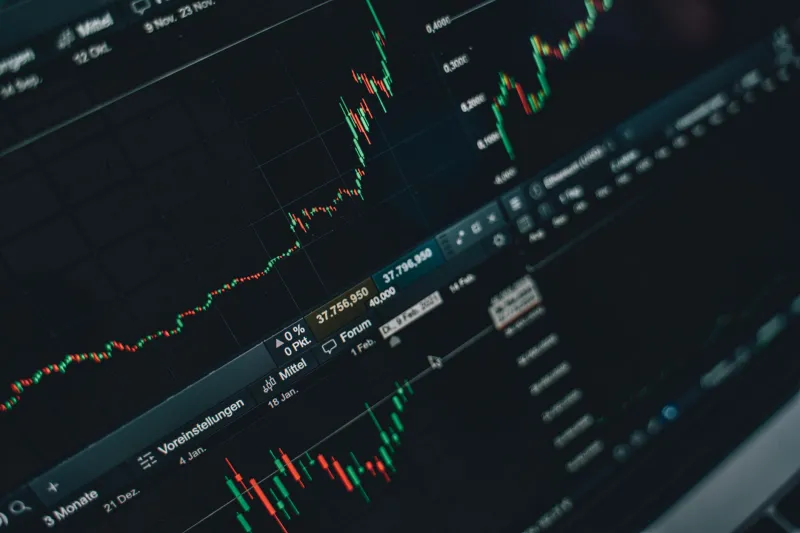
In wave physics, constructive interference occurs when two or more waves arrive at the same point in phase — their crests aligning, their troughs coinciding, their combined amplitude exceeding anything either wave could produce alone. The principle is elegant, predictable, and, in many engineering contexts, deliberately exploited. In financial markets, however, constructive interference is neither elegant nor deliberate. It is emergent, often invisible until it is catastrophic, and it may be the most underappreciated systemic risk in contemporary capital markets.
The analogy is not merely rhetorical. The mathematical structures governing how superimposed signals interact in signal processing — phase coherence, amplitude summation, resonant feedback — map with uncomfortable precision onto the behavior of modern algorithmic trading ecosystems. Understanding why requires examining not just what these systems do, but how their simultaneous operation transforms an ensemble of ostensibly independent agents into a single, dangerously coherent force.
The Illusion of Independence
Regulators and risk managers have long operated under the assumption that a marketplace populated by many competing algorithms is inherently diverse — that the sheer plurality of actors distributes risk and dampens extreme outcomes. This assumption, borrowed loosely from portfolio theory, treats each trading system as an independent source of signal. If one algorithm buys aggressively while another sells, the net effect is moderated. The market, in this view, self-corrects through the interference of opposing strategies.
The flaw in this reasoning becomes apparent when one examines the training pipelines of modern machine learning-based trading systems. The majority of institutional-grade quantitative funds operating in U.S. equity and derivatives markets draw from an overlapping universe of data sources: the same public earnings releases, the same macroeconomic indicators published by the Federal Reserve and the Bureau of Labor Statistics, the same alternative data vendors selling satellite imagery or credit card transaction flows. When the underlying training data is correlated, the resulting models — regardless of their architectural differences — tend to identify the same features as predictive and respond to the same stimuli in the same direction.
This is phase alignment by another name. The signals are not identical, but they are coherent enough that when an external perturbation arrives — an unexpected rate decision, a geopolitical shock, an earnings miss from a systemically important company — the responses of dozens or hundreds of algorithms arrive nearly simultaneously and point in the same direction. The individual amplitudes stack. The composite market movement exceeds what any single actor could produce, and often exceeds what the underlying economic reality would justify.
Feedback Loops as Resonant Cavities
Constructive interference in physical systems is frequently transient. Waves pass through one another and continue on their respective paths; the region of amplified amplitude is a moment in time, not a persistent state. Financial markets, unfortunately, do not share this property. They are reflexive systems, meaning that prices themselves become inputs to the models that generate subsequent prices. This reflexivity functions as what engineers would recognize as a resonant cavity — a bounded structure that sustains and amplifies oscillations rather than allowing them to dissipate.
Consider the sequence of events that preceded the May 6, 2010 Flash Crash, during which the Dow Jones Industrial Average shed nearly 1,000 points in minutes before partially recovering. Post-event analysis by the Commodity Futures Trading Commission and the Securities and Exchange Commission identified a cascade in which automated systems, responding to price signals generated by other automated systems, entered a self-reinforcing loop of sell orders. No single algorithm caused the event. The crash was a property of the system — an emergent amplitude produced by the constructive interference of correlated responses to a shared signal environment.
More recent episodes, including the volatility spikes observed during the early stages of the COVID-19 pandemic in March 2020 and the unusual behavior of certain equity markets during Federal Reserve communication events, display similar structural signatures. The speed and magnitude of price dislocations consistently outpace what human traders alone could produce, and they consistently cluster around moments when multiple algorithmic systems receive novel, high-salience inputs simultaneously.
Phase Coherence and the Homogenization of Strategy
The problem has been intensifying for reasons that are structural rather than accidental. The quantitative finance industry in the United States has undergone substantial consolidation over the past two decades. A small number of technology platforms — cloud computing providers, data vendors, open-source machine learning frameworks — now underpin the infrastructure of a large fraction of algorithmic trading operations. When the tools are shared, the methodologies converge. When the methodologies converge, the outputs align.
This dynamic is precisely what signal processing engineers describe as phase coherence across a channel. Individual transmitters may differ in power, carrier frequency, or modulation scheme, but if their timing is synchronized and their information content is correlated, the aggregate signal at the receiver is dominated by their constructive superposition. In market terms, the "receiver" is the price discovery mechanism, and the superimposed signal is the collective order flow of aligned algorithms.
Financial engineers at firms including the Federal Reserve Bank of New York and the Office of Financial Research have begun applying spectral analysis techniques — tools developed for decomposing complex waveforms into their constituent frequencies — to order book data in an attempt to identify coherence signatures before they produce destabilizing interference events. The work is nascent, but the conceptual import is significant: market microstructure analysis is increasingly borrowing the mathematical vocabulary of wave physics because the phenomena it is trying to describe are, in a meaningful sense, wave phenomena.
Toward Deliberate Destructive Interference
If constructive interference among correlated algorithms is the pathology, the therapeutic analogy is equally instructive. In noise-cancellation engineering, unwanted signal amplification is countered by introducing an anti-phase signal — a wave equal in amplitude but opposite in phase, designed to cancel the interference pattern through destructive superposition. Some regulatory proposals and market design interventions can be interpreted through exactly this lens.
Asynchronous execution mandates, which introduce randomized latency into order submission to desynchronize algorithm responses, function as phase disruptors. Circuit breakers, which halt trading when price movements exceed defined thresholds, operate as amplitude limiters — preventing the feedback loop from sustaining resonance long enough to produce catastrophic amplitude. Diversity requirements for model architectures, proposed in various forms by academic researchers and some regulatory commentators, would attempt to ensure that the trading ecosystem contains sufficient phase variance to prevent coherent superposition from dominating aggregate market behavior.
None of these interventions is without cost. Desynchronization introduces friction. Circuit breakers can themselves become signals that algorithms learn to anticipate and exploit. Mandated model diversity is extraordinarily difficult to define and enforce. But the framing matters: understanding market instability as an interference phenomenon rather than a behavioral or informational failure suggests a different class of solutions — ones focused on phase relationships and coherence properties rather than on the intentions or rationality of individual actors.
The Signal Behind the Noise
The financial system and the physical world share a deeper commonality than is typically acknowledged in either economics or engineering curricula. Both are domains governed by the superposition of many interacting signals, and in both, the aggregate behavior of the system can diverge dramatically from the behavior of any individual component. The language of wave interference — constructive, destructive, resonant, coherent — is not a metaphor imposed on markets from the outside. It is a description of mechanisms that operate within them.
For researchers at the intersection of signal processing, quantitative finance, and systemic risk, this convergence represents both an intellectual opportunity and a practical imperative. The mathematical tools already exist. The data, increasingly, is available. What remains is the institutional willingness to treat the synchronized behavior of algorithmic trading systems not as a curiosity of market microstructure, but as a first-order interference problem — one with the potential to produce amplitudes that no single wave, examined in isolation, would ever predict.