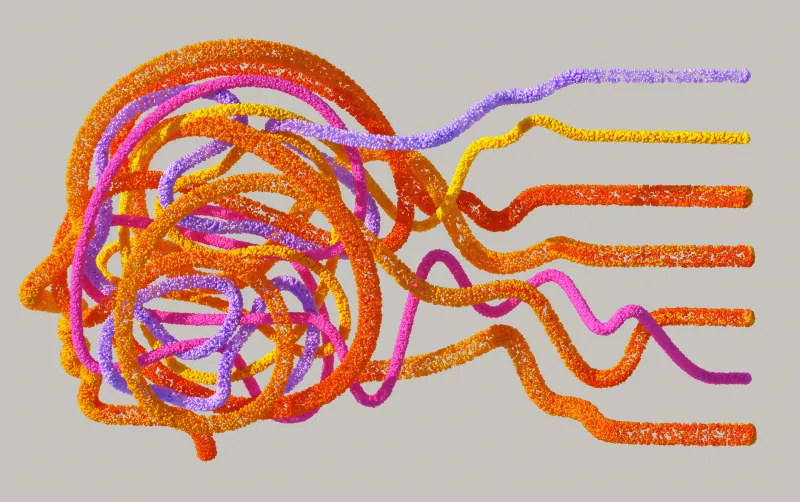
Out of Sync: The Neurotransmitter Phase Conflicts Driving Treatment-Resistant Psychiatric Outcomes

Among the most frustrating clinical realities in American psychiatry is the treatment-resistant patient: an individual who has responded adequately to each component of a medication regimen when assessed in isolation, yet who deteriorates — or fails to improve — when those components are combined. The conventional pharmacological explanation invokes receptor competition, metabolic interactions, or adverse effect accumulation. These mechanisms are real, but they are incomplete. A framework drawn from wave mechanics and signal processing offers an additional explanatory layer that the field has been slow to formalize, despite growing empirical evidence that neurotransmitter systems behave as oscillatory networks subject to interference dynamics.
Neurotransmitter Systems as Oscillatory Networks
The brain does not process neurochemical signals as static concentrations. Serotonin, dopamine, norepinephrine, and gamma-aminobutyric acid (GABA) are released, bound, cleared, and recycled in rhythmic patterns that are coupled to neural oscillations measurable at multiple frequency bands — from slow delta rhythms during sleep to high-frequency gamma oscillations associated with cognitive processing. Electroencephalographic research has established that disruptions to these oscillatory patterns correlate strongly with the symptom profiles of major depressive disorder, generalized anxiety disorder, bipolar spectrum conditions, and schizophrenia.
From this perspective, psychiatric medications are not merely chemical concentrations to be titrated upward until symptoms remit. They are interventions in a dynamic, time-varying signaling system. Their therapeutic effects depend not only on their receptor binding affinities and pharmacokinetic half-lives, but on how their temporal profiles of action interact with the endogenous oscillatory environment of the neural circuits they target. This is the conceptual foundation from which a wave-interference model of polypharmacy complications can be constructed.
The Serotonin-Norepinephrine Timing Problem
Selective serotonin reuptake inhibitors (SSRIs) and norepinephrine reuptake inhibitors (NRIs) are frequently combined in treatment-resistant depression, and the combination carries a plausible mechanistic rationale: each class addresses a distinct monoamine system implicated in depressive pathophysiology. Yet clinical outcomes data from the US STAR*D trial and subsequent pragmatic studies reveal that augmentation strategies involving both serotonergic and noradrenergic agents produce highly variable responses, with a subset of patients experiencing paradoxical worsening of anxiety, sleep disruption, and cognitive dulling.
The interference model provides a mechanistically coherent account of this variability. SSRIs and NRIs do not simply elevate their respective neurotransmitters in isolation. Serotonin and norepinephrine systems are reciprocally regulated: elevated serotonergic tone modulates noradrenergic firing rates through 5-HT2A receptor-mediated pathways, and noradrenergic activity influences serotonin release through alpha-2 adrenergic autoreceptor mechanisms. When two pharmacological agents simultaneously perturb both systems, the resulting neurochemical environment is not the sum of two independent interventions. It is the superposition of two interacting oscillatory perturbations whose phase relationships depend on the relative onset times, peak plasma concentrations, and receptor kinetics of each drug.
When these phase relationships are constructive — when the serotonergic and noradrenergic perturbations align in a way that reinforces the target oscillatory pattern in prefrontal-limbic circuits — clinical benefit follows. When they are destructive — when the perturbations arrive out of phase relative to the endogenous oscillatory architecture — the superposition can suppress the very neural rhythms associated with affective regulation and cognitive flexibility.
Benzodiazepine Augmentation and the GABA Interference Problem
The interference dynamics become more complex, and potentially more clinically consequential, when GABAergic agents are introduced into existing monoaminergic regimens. Benzodiazepines, prescribed as adjuncts for anxiety or sleep disturbance in patients already receiving SSRIs or antipsychotics, act by potentiating GABA-A receptor-mediated chloride conductance — effectively increasing the amplitude of inhibitory postsynaptic potentials throughout the central nervous system. In isolation, this produces anxiolytic and sedative effects through broadly predictable mechanisms.
However, GABAergic inhibition is not uniformly distributed across neural circuits. Interneuron networks that generate gamma oscillations — the 30-80 Hz rhythms associated with working memory, attentional focus, and perceptual binding — are critically dependent on precisely timed inhibitory-excitatory cycling. Benzodiazepine potentiation of GABA-A receptors at these interneurons does not merely slow the circuit; it alters the phase relationships between inhibitory and excitatory components of the oscillatory cycle. When this phase alteration is superimposed on the altered serotonergic and noradrenergic environment produced by existing medications, the resulting interference pattern in gamma-frequency circuits can degrade the very cognitive functions that antidepressant treatment is intended to restore.
This mechanism may partially explain the well-documented association between long-term benzodiazepine use in antidepressant-treated patients and persistent cognitive complaints — a phenomenon that is difficult to account for through receptor desensitization alone, but that follows naturally from a model in which pharmacologically imposed phase shifts accumulate across interacting oscillatory systems.
Pharmacokinetic Phase Drift
A further complication arises from the temporal dimension of drug action. Psychiatric medications vary enormously in their half-lives: fluoxetine's active metabolite norfluoxetine has a half-life exceeding a week, while quetiapine is largely cleared within twelve hours. When medications with disparate half-lives are combined, the phase relationship between their peak pharmacodynamic effects is not constant — it drifts across the dosing cycle. A patient taking both medications may experience a period of near-constructive superposition during the hours following administration, followed by a period of increasing phase divergence as the shorter-acting agent clears while the longer-acting one maintains its receptor occupancy.
This pharmacokinetic phase drift may explain why some patients report that their symptom profiles vary systematically across the day in ways that cannot be attributed to circadian factors alone. The wave-mechanics framing suggests that optimal dosing timing — analogous to phase alignment in a communications system — may be as therapeutically relevant as dose magnitude, a hypothesis that remains largely untested in clinical trial design.
Toward Phase-Aware Prescribing
The practical implications of this framework are not yet fully translatable into clinical guidelines, but they point toward a set of research priorities that the field would benefit from pursuing. Computational psychiatry, which models neural circuits as dynamical systems, provides methodological tools for simulating the interference effects of pharmacological combinations before they are tested in patients. EEG-based biomarkers of oscillatory coherence could, in principle, serve as phase-sensitive indicators of whether a given combination is producing constructive or destructive superposition in target circuits — a level of mechanistic specificity that current symptom-rating scales cannot provide.
For the many Americans navigating treatment-resistant psychiatric conditions, the interference model offers something that conventional pharmacological frameworks often do not: an explanation for why adding more treatment can sometimes mean receiving less of it.