Ghost Signals: How Multipath Interference Is Haunting Autonomous Vehicle Radar

On a clear stretch of highway, an autonomous vehicle's radar system is a marvel of applied physics. Millimeter-wave pulses radiate outward, strike objects, and return with encoded information about distance, velocity, and angle. The math is elegant, the latency is milliseconds, and the system performs with a confidence that has persuaded engineers, regulators, and consumers alike. Then the vehicle enters downtown Chicago.
Between the glass towers and concrete overpasses, the radar's orderly world collapses. Signals scatter, bounce, and recombine in ways the original transmission never intended. Echoes arrive from directions that suggest objects in impossible locations. Velocity readings flicker. And somewhere in the noise, a delivery truck is pulling into an intersection. This is the interference problem at the heart of autonomous driving—and solving it requires a rigorous understanding of wave physics that goes far beyond the textbook Doppler equation.
The Doppler Assumption and Where It Breaks Down
Radar-based velocity estimation relies on the Doppler effect: a transmitted wave reflected by a moving object returns at a shifted frequency proportional to the object's radial velocity. The calculation is clean when there is one transmitter, one target, and one unobstructed path. Real urban environments offer none of those conditions simultaneously.
When a radar pulse from an autonomous vehicle strikes a moving pedestrian who is also walking alongside a parked bus, the return signal is a composite. The direct reflection from the pedestrian carries one Doppler signature; a secondary reflection that bounced off the bus before reaching the pedestrian carries a subtly different one. These two components interfere at the receiver, producing a combined waveform whose apparent Doppler shift corresponds to neither the pedestrian's actual velocity nor the bus's. The system may compute a velocity that is physically plausible but factually wrong—what engineers sometimes call a Doppler ghost.
The severity of this effect scales with scene complexity. A single-lane rural road presents few reflective surfaces. A six-lane urban arterial lined with steel-and-glass facades, moving taxis, cyclists, and wet pavement creates a dense multipath environment where dozens of indirect signal paths compete with the direct return at any given moment.
Multipath Propagation: When Geometry Becomes the Enemy
Multipath interference occurs when a transmitted signal reaches the receiver via two or more propagation paths of differing lengths. Because electromagnetic waves travel at a fixed speed, the path-length difference translates directly into a phase difference at the receiver. Depending on that phase offset, the multiple arrivals can interfere constructively—amplifying a return and making a small object appear larger—or destructively, attenuating the return until the object effectively disappears from the radar's perception.
In urban canyons, the geometry conspires against reliable detection. A signal emitted at a low elevation angle can reflect off the road surface before striking a target vehicle ahead, then return to the receiver along both the direct scattered path and the ground-reflected path. If the two path lengths differ by half a wavelength—on the order of a few millimeters for automotive radar operating near 77 GHz—the returns cancel. The vehicle ahead vanishes from the point cloud, at least momentarily. At highway approach speeds, even a 200-millisecond blind spot translates into meters of unmonitored closing distance.
This is not a theoretical concern. Researchers at institutions including Carnegie Mellon and the University of Michigan have documented systematic detection failures in controlled multipath scenarios, and several publicly reported AV incident investigations have cited signal ambiguity as a contributing factor in near-miss events.
Interference Across the Sensor Suite
The problem is compounded by the fact that modern autonomous vehicles do not rely on a single radar unit. A production-ready system may incorporate four to six radar modules, multiple lidar units, and an array of cameras, all operating simultaneously. While sensor fusion is intended to resolve ambiguities through redundancy, it introduces a new class of interference: inter-sensor crosstalk.
Two radar modules mounted on the same vehicle, operating at nearby frequencies, can generate mutual interference when their transmitted waveforms overlap in time and space. The resulting beat frequencies can register as false targets at specific ranges—what the signal-processing community calls phantom detections. Frequency-modulated continuous-wave (FMCW) radar, the dominant architecture in automotive applications, is particularly susceptible when multiple units sweep overlapping frequency ramps asynchronously.
Lidar systems face an analogous challenge. Pulsed lidar units from different vehicles or infrastructure nodes can inject spurious returns into one another's receivers when their pulses arrive during an active detection window. As vehicle density increases—precisely the condition in urban environments where reliable sensing matters most—inter-vehicle lidar interference grows from a nuisance into a systemic reliability issue.
Engineering Responses: Coding, Diversity, and Adaptive Cancellation
The engineering community has not been idle. Several strategies are converging to address interference-driven degradation, each drawing on principles that will be familiar to readers versed in communications theory.
Waveform coding and orthogonality. By assigning each radar module a distinct pseudo-random code or orthogonal frequency set, engineers can design receivers that reject signals not matching the expected code. This approach, borrowed from CDMA telecommunications, allows a vehicle to distinguish its own reflections from those generated by a neighboring vehicle's radar, dramatically reducing phantom detections in dense traffic.
Spatial diversity and MIMO radar. Multiple-input multiple-output (MIMO) radar architectures use an array of transmitters and receivers to synthesize a virtual aperture far larger than the physical antenna. Because each transmitter-receiver pair samples the target from a slightly different spatial angle, multipath components—which are angle-dependent—decorrelate across the array. Signal processing can then identify and suppress returns that are inconsistent across the virtual aperture, isolating the true direct-path reflection.
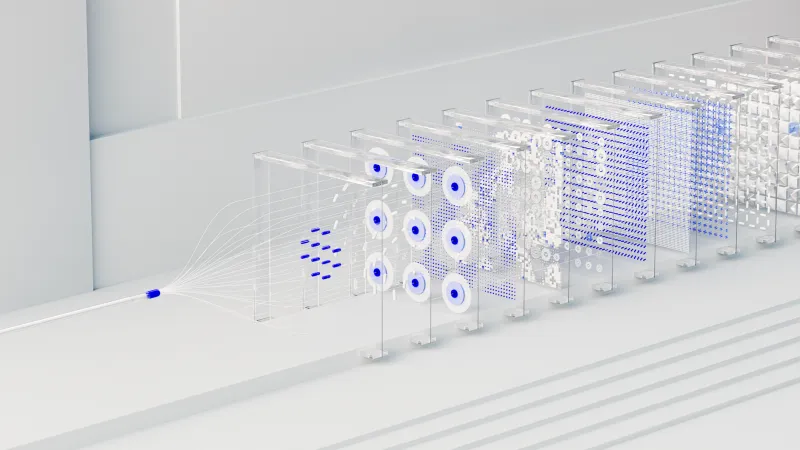
Machine learning-assisted disambiguation. Several AV developers are training neural networks on labeled radar data that includes known multipath and interference scenarios. The networks learn statistical signatures that distinguish genuine targets from interference artifacts—a velocity distribution that is physically inconsistent with the scene geometry, for example, or a range profile that matches the characteristic spread of a ground-bounce multipath rather than a rigid object. These learned priors allow the system to flag and discount anomalous returns that rule-based processing would accept uncritically.
Dynamic frequency agility. Adaptive systems that monitor the interference environment in real time and shift their operating frequency away from congested bands are beginning to appear in research prototypes. The challenge is coordination: without a shared protocol, two vehicles performing simultaneous frequency hops may simply chase each other across the band.
The Road Ahead
The interference problem in autonomous vehicle sensing is, at its core, a wave physics problem dressed in engineering clothes. Every solution ultimately requires a deeper accounting of how signals propagate, combine, and distort in complex environments—the same intellectual discipline that underlies phased-array design, optical coherence tomography, and gravitational-wave detection.
What distinguishes the automotive context is the stakes and the scale. A radar system that works reliably in 99.9 percent of scenarios still fails once every thousand encounters—and on American roads, where the Department of Transportation estimates over 3 trillion vehicle miles are traveled annually, even vanishingly small failure rates accumulate into significant numbers of incidents.
Engineers working at this frontier are, in a meaningful sense, doing applied interference science under operational pressure. The urban canyon is their laboratory, and every ghost signal they learn to exorcise brings the promise of safe autonomous mobility one frequency closer to reality.