Dark Fiber, Bright Signals: The Case for Turning America's Idle Cables into an Earthquake Early-Warning Lattice
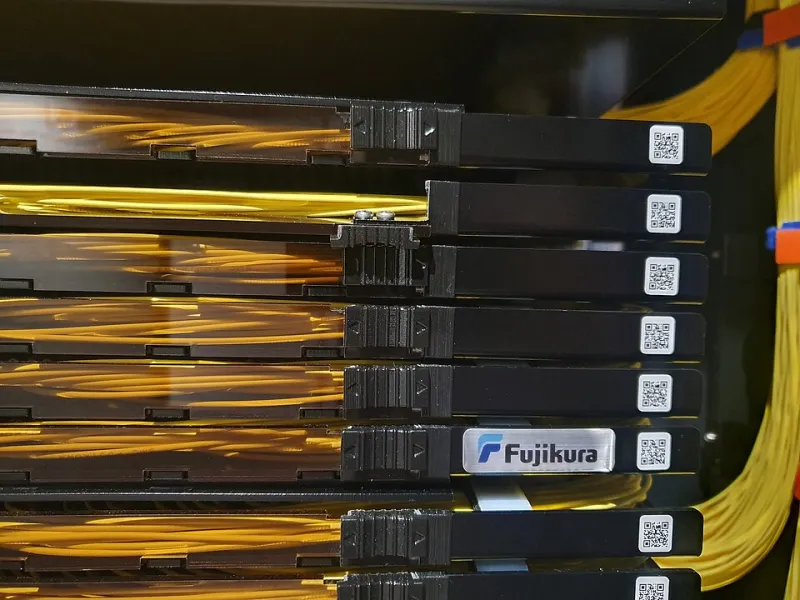
Photo: Syced, CC0, via Wikimedia Commons
Beneath American highways, rail corridors, and city streets lies an enormous, mostly silent sensing network that nobody is using. Dark fiber—optical cable installed but never lit—runs in the millions of miles across the country. In my view, this dormant infrastructure represents the single most underexploited opportunity in US earthquake science. With the right investment, it could become a continental early-warning lattice capable of detecting seismic precursors that traditional seismometer networks miss.
The Physics: Fiber as Interferometer
The principle is elegantly simple. Send laser pulses down an optical fiber and measure the backscattered light returning from imperfections in the glass. When the ground shifts—even by nanometers—the fiber strains minutely, altering the optical path length and therefore the phase of the returning light. Interrogate successive segments of cable, and interference patterns between reference and returning light convert the entire fiber into thousands of virtual sensors spaced meters apart.
This is distributed acoustic sensing (DAS), and it is not speculative. Experiments on the Alpine Fault in New Zealand, along California's Sacramento–San Joaquin Delta, and through the Stanford campus have shown that buried telecom fiber detects trains, footsteps, and—critically—earthquakes with sensitivity rivaling dense seismometer arrays at a fraction of the cost per sensing point.
Why This Matters for Early Warning
The ShakeAlert system on the West Coast is a genuine achievement, but it depends on sparse, expensive seismometer stations. DAS flips the economics: one interrogator unit can monitor a 50-kilometer fiber strand, yielding tens of thousands of measurement channels. Urban fiber runs beneath the very cities at risk—Los Angeles, Seattle, the Bay Area—placing sensors directly in the damage zone rather than at remote stations.
There is also the tantalizing question of precursory signals. Slow-slip events and low-amplitude tremor preceding major ruptures are often too faint for sparse networks to resolve. A fiber lattice with meter-scale sampling could map these subtle strain transients in unprecedented detail, potentially buying minutes rather than seconds of warning. That claim remains scientifically contested, and I want to be clear: DAS is not a crystal ball. But even without precursors, denser real-time shaking data improves every downstream alert.
The Policy Gap
The technology is ready; the deployment is not. Academic DAS experiments run on borrowed telecom fiber under temporary agreements, and there is no national program to systematically integrate fiber sensing into hazard monitoring. Compare this with Japan, where fiber-based observation is being woven into national infrastructure planning.
Congress should direct USGS and NSF to establish a national dark-fiber sensing initiative: standardized interrogator deployments along priority seismic corridors, data pipelines feeding directly into ShakeAlert, and agreements with telecom carriers to dedicate strands for public safety. The fiber is already in the ground. The light just needs to be turned on.
We spent a century building a grid of physical sensors one station at a time. The interference patterns in America's idle glass can do the same job—if we choose to listen.